BURAN is a programming language where everything is a pattern and all computation occurs through pattern transformation.
["Greetings!"] ↦ [stdout]
factorial {
[0] ↦ [1]
[𝑛] ↦ [𝑛 × factorial(𝑛 − 1)]
}
factorial([5]) ↦ [120]
No if, return, or match keywords—patterns are the logic. Standard mathematical notation (×, −, 𝑛) makes definitions readable as formulas. The transformation arrow ↦ shows data flow explicitly.
Rather than describing procedures or sequences of operations, Buran programs define how patterns of data transform into other patterns, creating an elegant and unified model of computation. Designed with non-human coding and development in mind, Buran's consistent syntax and clear semantics make it ideal for machine generation while remaining readable by humans—including specialist non-programmers such as mathematicians, who can write programs using standard ISO 80000-2 notation, and linguists who can express grammatical rules directly as pattern transformations.
In Development — Specification and reference implementation coming early 2026
Paradigms
Buran embraces multiple computational paradigms unified under the pattern transformation model:
Applications
Computational Linguistics
Buran excels at natural language processing tasks where text must be analyzed, transformed, and structured. Its pattern-matching foundation makes it natural to express grammatical rules, morphological transformations, and syntactic parsing. The language's support for Unicode and extended grapheme clusters ensures proper handling of text in any human language.
Mathematical Computing
With native support for mathematical notation following ISO standards, Buran allows mathematicians and scientists to write expressions as they would on paper. Domain-specific evaluation for matrices, complex numbers, symbolic calculus, and statistics enables sophisticated mathematical computation while maintaining notational clarity.
General Programming
Beyond specialized domains, Buran serves as a capable general-purpose language. Its pattern transformation model naturally expresses data processing pipelines, configuration transformations, and any task that involves recognizing structure and producing corresponding output. The unified syntax reduces cognitive load across problem domains.
Symbolic Computation
The language's roots in symbolic processing make it ideal for computer algebra systems, theorem provers, and formal verification tools. Patterns can represent mathematical expressions, logical formulas, or any structured symbolic data, with transformations implementing inference rules and algebraic simplifications.
Philosophy
At its core, Buran embodies the belief that computation is fundamentally about recognizing patterns and producing corresponding results. By making patterns first-class citizens and transformation the universal operation, the language achieves remarkable consistency: data structures, function definitions, type declarations, and I/O operations all follow the same pattern-based model.
The language embraces Unicode not as an afterthought but as a foundational design decision, enabling programs that read naturally whether expressing linguistic rules, mathematical formulas, or general algorithms. This commitment to human-readable notation reflects Buran's goal of bridging the gap between formal specification and intuitive understanding.
Origins
Buran synthesizes ideas from six decades of programming language research, drawing particularly from languages that treated symbolic manipulation and pattern matching as fundamental operations rather than mere conveniences.
Panini's Astadhyayi
~400 BCEThe first formal language system. Panini's Sanskrit grammar consists of approximately 4,000 algebraic rewrite rules that transform linguistic patterns into surface forms. This ancient Indian masterwork anticipated modern computation by two millennia—its sutras are pattern transformation rules, making it the conceptual ancestor of all rule-based programming.
Mathematical Notation
1557The formal language of mathematics. Mathematicians developed precise symbolic notation over centuries to express complex ideas concisely and unambiguously. Buran treats standard mathematical notation as directly executable code, following ISO 80000-2 conventions—allowing mathematicians to write programs as they would write formulas.
Lisp
1958The original symbolic computation language. Lisp established that programs and data could share the same representation, enabling metaprogramming and symbolic manipulation. Buran inherits this homoiconicity through its universal pattern syntax.
SNOBOL
1962Pioneered sophisticated string pattern matching with backtracking. SNOBOL demonstrated that pattern matching could be a primary control structure, not just a string operation. Buran extends this vision to all data types.
Refal
1966The most direct ancestor. Developed in the Soviet Union, Refal introduced pattern transformation as a complete computational model. Programs were systems of rewriting rules where expressions matched patterns and transformed into results. Refal was reportedly used to program the autonomous flight systems of the Soviet Buran space shuttle—the language's namesake. Buran's core semantics descend directly from Refal's vision.
Prolog
1972Brought pattern matching to logic programming through unification. Prolog showed that declarative pattern-based specifications could replace imperative algorithms. Buran adopts this declarative spirit while avoiding Prolog's logical variable semantics.
ML
1973Integrated pattern matching with static typing and algebraic data types. ML proved that pattern matching and type safety could coexist elegantly. Buran's type system through identity metadata echoes ML's philosophy of types as documentation.
APL
1966Demonstrated that mathematical notation could be executable. APL's use of special symbols for array operations presaged Buran's embrace of Unicode for natural mathematical expression. Both languages prioritize notation that matches how practitioners think.
Wolfram Language
1988Combined symbolic pattern matching with computational mathematics. Wolfram Language's transformation rules and domain-specific evaluation strategies directly influenced Buran's approach to mathematical computing and its domain system.
Haskell
1990Refined pattern matching in a purely functional context with lazy evaluation. Haskell's guards, where-clauses, and pattern syntax informed Buran's pattern guard system and its approach to compositional program construction.
From these foundations, Buran emerges as a synthesis: Panini's rewrite rules, mathematical notation's formal precision, Refal's transformation model, Lisp's symbolic flexibility, SNOBOL's pattern sophistication, Prolog's declarative clarity, ML's type discipline, APL's notational boldness, Wolfram's mathematical domains, and Haskell's functional elegance. The result is a language that treats pattern transformation not as one feature among many, but as the unifying principle of all computation.
This synthesis positions Buran for a new era of computing. Its consistent, pattern-based semantics make it ideally suited for machine generation—AI systems can produce correct Buran code more reliably than languages burdened with historical irregularities. Yet the same consistency, combined with domain-native notation, makes Buran genuinely accessible to specialists who have never programmed: mathematicians writing executable formulas, linguists encoding grammars, scientists expressing models. Buran bridges the gap between human expertise and machine execution, offering a path toward computing that serves both.
X-Buran
The identifier x-buran serves as a unified technical identity across multiple contexts:
Language Code
A valid BCP 47 private-use language tag. Use lang="x-buran" in HTML or Content-Language: x-buran in HTTP to identify Buran source code in multilingual contexts.
Domain
The official home at x-buran.com. Documentation, specifications, and resources for the Buran programming language.
HTTP Header
Custom headers like X-Buran-Version or X-Buran-Domain can carry metadata about Buran-processed content through the protocol layer.
Inception
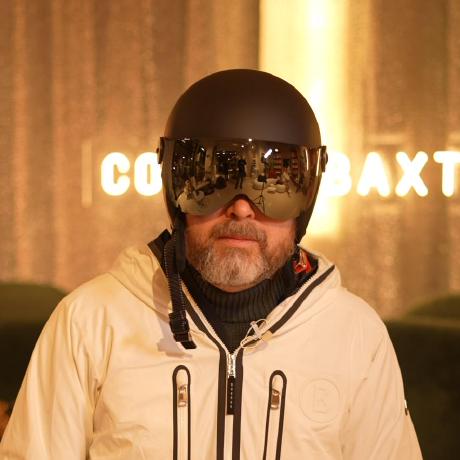
Programmer. Linguist. Harvard graduate. Was invited to teach a programming class while still in the third grade of elementary school.
Created Buran in 2025, drawing inspiration from decades of research in symbolic computation and pattern-matching languages to create a modern language for a new age of computing.